Written by: Andreja Barberić, PR Account Senior, not ChatGPT
Sustainable, sustainable, sustainable, sustainable, sustainable and sustainable business at every step. Today, the term sustainable business is often used as a buzzword. We hear it in marketing campaigns, reports, and at conferences. Yet, we still too often equate it with individual responsible projects such as tree planting, donations, or the use of recycled packaging. But sustainability is not a project, it is a way of doing business. A company is not sustainable if it meets only one criterion. True sustainability means that the same principle permeates all processes, from procurement and production to distribution, culture, and relationships with the community.
In that sense, several global examples show that sustainable business is not just a moral choice, but the logic of the future.
Sustainable business in practice – Google
Google is one of the pioneers of digital sustainability. Back in 2017, it became the first major company to operate on 100% renewable energy. But what sets it apart is not just the transition to clean energy, but its philosophy. Google develops data centers that independently optimize energy consumption through artificial intelligence. In this system, every unit of energy has a purpose, and algorithms “learn” how to reduce waste and heat. This approach shows what sustainability means when it is integrated into the core of the business model, rather than a promotional campaign.
Sustainable business through beauty – L’Oréal
L’Oréal has gone a step further, building its sustainability through beauty. Their “L’Oréal for the Future” philosophy is based on green chemistry principles and investments in ecological formulas, biodegradable ingredients, and smart packaging. Their factories are energy efficient, and water is recycled in a closed loop. But L’Oréal also understands the social dimension: empowering women, fair labor practices, and educating employees about climate change. For them, sustainable business is a combination of aesthetics, ethics, and economics. A balance that shows luxury can also be responsible.
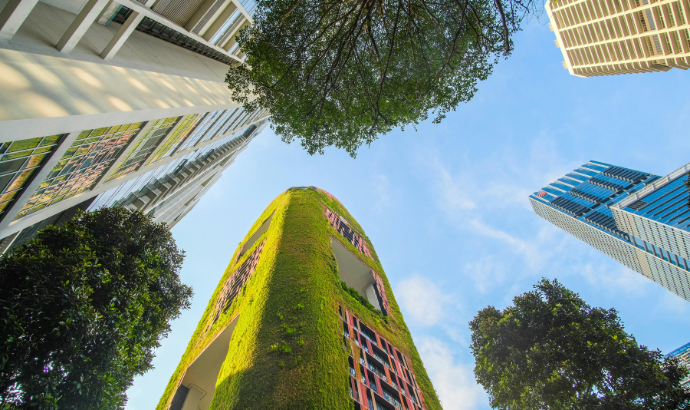
Schneider Electric – the world’s most sustainable corporation
Schneider Electric, a well-known global name in the energy sector, has twice been named the world’s most sustainable corporation. What makes them unique is their practicality: they do not just sell products, but solutions that help others become energy efficient. Their energy management systems use artificial intelligence to reduce consumption in industry, hotels, and cities. They place special emphasis on education and training. Their youth education and entrepreneurship program is implemented in more than 60 countries, enabling marginalized and underrepresented communities to acquire technical and entrepreneurial skills needed for active participation in the green transition. Their Cox’s Bazar project in Bangladesh uses digital twin technology to educate displaced communities in maintaining solar systems and recycling electronic waste. The “Conserve My Planet” program encourages active student participation in India, Kenya, Vietnam, and Thailand in practical sustainable development projects. In Brazil, mobile educational units provide access to education on renewable energy for minors in the prison system, encouraging their resocialization and reducing recidivism rates.
Apple and one of the more well-known sustainability campaigns
And finally, Apple. Their well-known Mother Nature video perfectly embodies the idea of sustainable business as part of identity, not just a campaign. Apple has not only reduced its carbon footprint but also produces devices from recycled materials, uses renewable energy, and plans to become fully carbon neutral by 2030. Symbolism is key. In the video, nature speaks with Apple’s team: demanding, honest, slightly sarcastic. The message is clear: nature does not read reports, it sees actions.
Sustainable business as a relationship with the world we live in
When we look at these examples together, it becomes clear that sustainable business is not just a set of rules and certificates, but a relationship with the world. Google digitally transforms consumption, L’Oréal combines beauty and responsibility, Schneider electrifies the future and educates, and Apple gives the story back to nature. Each in its own way, but all toward the same goal: a system that functions without excess and without shortage, just like nature itself.
Nature does not do marketing. It does not publish reports, use slogans, or measure results quarterly. Yet, it functions perfectly. If every company operated with the same harmony, balance, and purpose, then we could truly say that we understand what sustainable business means.
For a deeper understanding of global trends, take a look at the World Economic Forum report.