

Written by: Andreja Barberić, PR Account Senior, not ChatGPT
Investor:
Will this company be competitive and profitable in ten or twenty years?
Company:
Of course. We are market leaders. We have excellent processes.
Investor:
Prove it.
And that is where the real story of ESG strategy begins.
Today, investors do not look only at balance sheets and quarterly results. They want to assess the resilience of the business model, exposure to climate and regulatory risks, the quality of governance, and the ability to adapt to change. In other words, they want proof that the company will survive and create value in the long term. ESG strategy becomes a concrete answer to that question. The importance of ESG strategies is easiest to demonstrate through practical examples, in my opinion some of the best in the world. Although there are many more, I have tried to highlight one from each area. If you have a good example, feel free to share it.
When ESG strategy becomes proof, not a promise
Transformation as a response: Ørsted
About a decade ago, Ørsted was a traditional energy company heavily reliant on fossil fuels. Today, it is a global leader in offshore wind power. Instead of declarative sustainability, they carried out a complete transformation of their business model:
- exit from coal and fossil fuels
- science-based climate targets
- linking ESG indicators to management compensation
This sends a clear message to investors: transition risk is reduced, and the business model is aligned with the energy future. This is not PR. This is a capital strategy.
Sustainability as market differentiation: Danone
Danone has embedded ESG into its supply chain and product development. Regenerative agriculture, sustainable packaging, and B Corp certification are not isolated initiatives. They protect long-term access to raw materials and strengthen the brand. For investors, this means:
- a more resilient supply chain
- lower reputational risk
- more stable growth in premium segments
Here, ESG becomes margin protection.
Values that generate capital: Patagonia
Patagonia has gone even further. Environmental responsibility has become the foundation of the brand’s identity. A transparent supply chain, 1% of revenue allocated to environmental initiatives, and encouraging customers to repair products create strong loyalty and long-term revenue stability. Investors see something important here: a strong brand reduces volatility and increases revenue predictability.
Risk management through ESG: Novo Nordisk
In the pharmaceutical industry, regulatory risk is significant. Novo Nordisk uses ESG as a risk management tool.
- ESG KPIs linked to executive compensation
- climate targets validated by scientific standards
- programs ensuring access to therapies
Investors see reduced regulatory risk and long-term stability in relationships with public institutions. ESG becomes an instrument of stability.
ESG as a revenue generator: Schneider Electric
At Schneider Electric, ESG is not just an internal practice, it is the business model. By developing solutions and platforms, the company enables clients to achieve energy efficiency and digital optimization of energy consumption. Sustainability becomes a product. Imagine a city with infrastructure that is 50 years old. Pipes are breaking. Water losses are increasing. Energy consumption is high. Climate extremes further strain the system. An investor asks: What is the risk? In collaboration with U.S. cities, Schneider Electric has implemented software-defined automation and digital management of water infrastructure:
- real-time monitoring of losses
- optimization of energy consumption
- predictive maintenance
- greater system resilience to climate extremes
This is not just a technical solution. It is a reduction of operational and climate risk. Water becomes an ESG topic, but also an investment one. Companies and cities that ignore water infrastructure risk rising costs, regulatory penalties, and reputational crises.
Investors recognize:
- growth of the energy transition market
- regulatory support
- long-term structural trends
Here, ESG generates revenue.
Social stability as operational strength: Starbucks
Starbucks has invested in employees, suppliers, and the sustainability of its supply chain. Employee education programs and support for coffee growers reduce operational risks and strengthen reputation. Investors see a more stable workforce and lower exposure to reputational crises.
ESG and capital: Banco Santander
Santander has integrated ESG into credit assessments and the issuance of green bonds. Climate scenarios have become part of risk evaluation. Sustainable financing has become part of the portfolio.
Investors see:
- better credit risk assessment
- alignment with regulatory requirements
- access to the growing green capital market
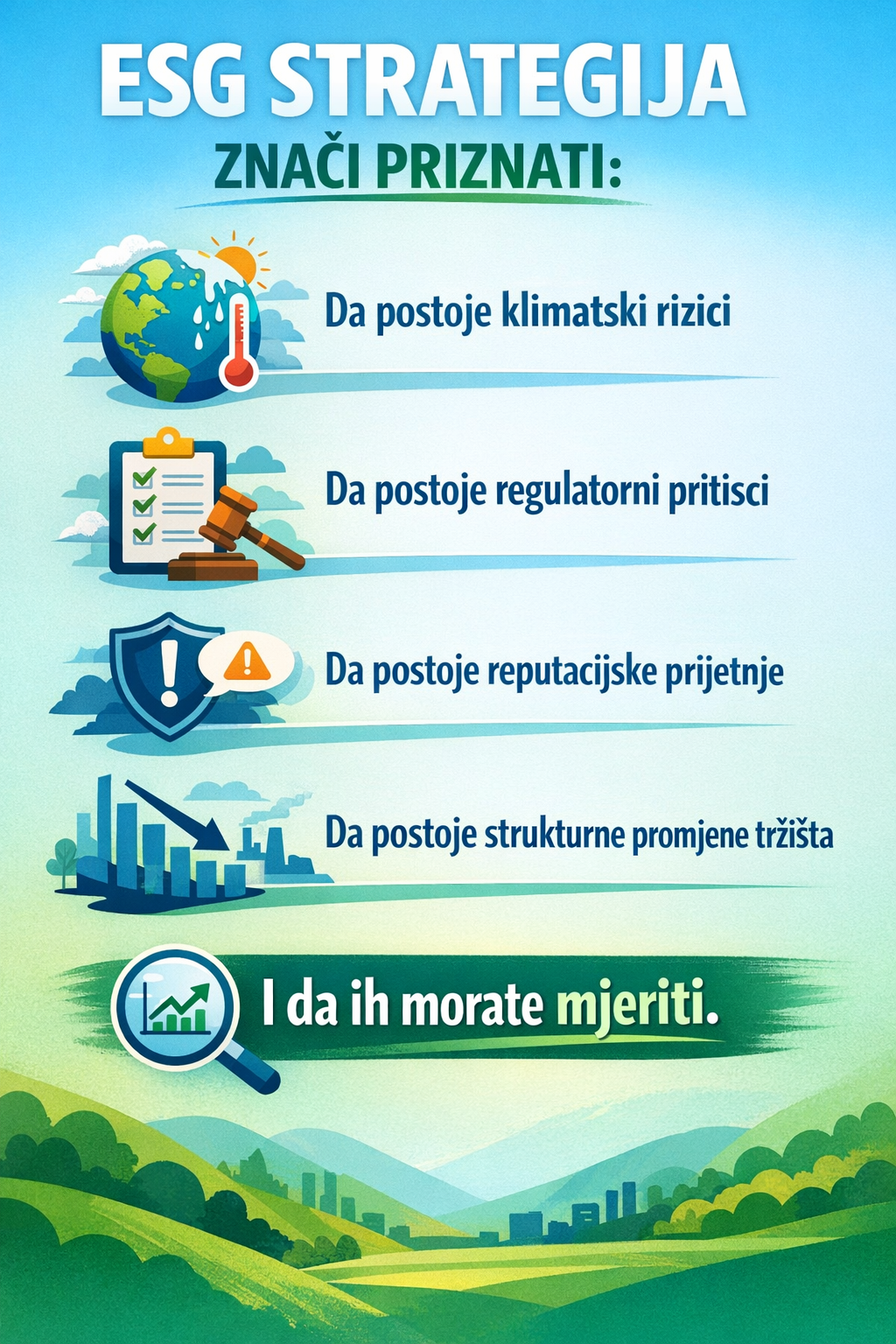
And finally, we return to the initial question …
Investor:
Will this company be competitive and profitable in ten or twenty years?
ESG strategy enables the company to respond:
- we understand our climate risks
- we understand regulatory challenges
- we understand how we manage suppliers
- we understand how we measure impact
- we understand how to adapt the business model
ESG is, in essence, proof of the ability to adapt.
Why is ESG important to investors?
Because investors do not invest in the past. They invest in the future. And the future belongs to companies that:
- manage risks
- understand regulatory trends
- integrate sustainability into their business model
- create long-term value
Whether we want to admit it or not, the most important thing in this whole story is that ESG is not a marketing or PR declaration. It is the answer to the investor’s question: “Can you prove that you will survive?”
You do not have to answer the investor, be honest and answer yourself today: can you prove that you will survive in 5 or 10 years? If you cannot, you know what you need to do. Admit it.