

Written by: Andreja Barberić, PR Account Senior, not ChatGPT
ESG strategy and criteria today are among the most important indicators of a company’s long-term sustainability and resilience. It is not just a trendy term or a fashionable addition for companies. It is no longer just a reporting framework, but a tool that determines competitiveness in the global market. ESG criteria are the foundation for understanding how business impacts the environment and society, but also how the risks it faces are changing. Investors, customers, and regulatory bodies increasingly expect transparency, accountability, and a clear sustainability strategy. On the other hand, at a time when climate change is rapidly affecting nature and resources, ESG criteria are becoming a matter of survival, not just reputation. Companies that ignore them risk becoming irrelevant.
What does ESG criteria mean in practice?
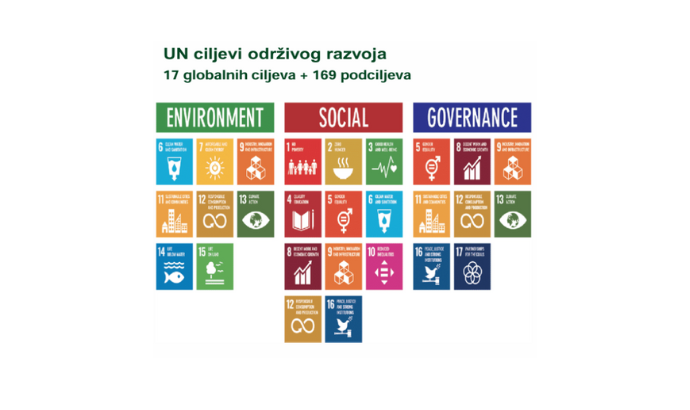
ESG criteria include environmental, social, and governance indicators. The environmental component includes greenhouse gas emissions, resource consumption, energy efficiency, and climate risks, which are increasingly affecting business models. The social dimension covers labor rights, diversity, employee safety, and relationships with the local community. The governance component focuses on business ethics, transparency, responsible management, and internal control systems. In practice, ESG helps companies better understand their risks, but also opportunities for innovation and efficiency.
Modern requirements, such as ESRS (European Sustainability Reporting Standards), impose double materiality: a company must analyze not only how environmental and social conditions affect it, but also how it contributes to those conditions.
Through ESG criteria, an organization does not just gain a good “green certificate.” It gains a tool for identifying and managing risks: climate, reputational, regulatory, and opportunities: innovation, energy savings, attracting investors, and stronger credibility.
ESG strategy and real challenges in Europe: the example of water scarcity
That ESG is not mere “green phrasing” is shown by a recent warning. According to a recent analysis of satellite data for the period 2002–2024, surface and groundwater reserves across much of Europe, especially in the south and central parts of the continent, are rapidly declining. This means that companies and economies in these regions risk water crises, reduced agricultural yields, problems in water supply, as well as environmental and social consequences.
But companies that apply ESG criteria can and should respond. For example: by incorporating water scarcity risk into their ESG strategy, reducing resource consumption, investing in efficient and sustainable water use, recycling, and adapting to climate conditions. Such companies do not look only at profit, but at the survival of their business. In this context, ESG criteria are not an addition, but a necessity.
Standardization and regulation: a tool, but also a warning
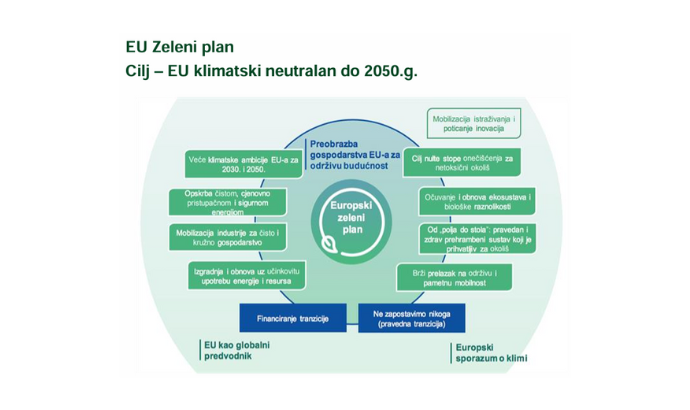
The reporting system brings clear rules. Alongside ESRS, companies must identify relevant topics (materiality), monitor data, and report regularly. This ensures transparency and credibility. Relevant guidelines are also available through the European scientific center JRC. However, regulation and ESG standards are not an end in themselves. They are tools for companies to recognize real environmental and social risks, such as water scarcity, and to adapt their business to real challenges, not passing “green trends.”
ESG criteria must be more than reporting and PR
Many companies today perceive ESG as a way to improve their image. But that is superficial. If ESG is used only for marketing, without integrating real changes such as more rational water use, energy efficiency, and responsible resource management, then it is just a “green facade.” These “green facades” collapse when faced with real challenges such as drought, water scarcity, and climate change. What was once part of corporate communication is becoming a matter of survival.
New regulations: a step forward or backward?
On one hand, encouraging ESG strategies and standardized reporting brings structure. Standards, rules, reports. That is important. But recent regulatory decisions to raise thresholds, reduce scope, and lower the level of assurance can send a dangerous signal.
Because while Europe is facing real problems, such as the massive reduction of water reserves, which threatens agriculture, ecosystems, and the economy, reducing reporting obligations means fewer companies are required to plan for these risks. That is risky. It means many dimensions of sustainability remain “off the radar.” It means a step backward.
If ESG criteria remain only a declaration for large companies, without real breadth and application, Europe could miss the opportunity to truly adapt to climate change and protect its ecosystems and resources.
In a world where satellites show that water reserves are disappearing, ESG criteria must become an obligation, not a luxury. It must be a framework for all companies, without exception.
And while Europe reconsiders its regulatory direction, and climate risks increasingly move from theory into everyday reality, responsible companies cannot wait for regulation to “force” them into sustainability. Therefore, here are several recommendations that organizations can apply today, not because of regulation, but because of business logic, resilience, and long-term sustainability.
- Integrate ESG into strategy, not PR
- Introduce double materiality as a risk management tool
- Include water management in core ESG KPIs
- Invest in energy efficiency before “green campaigns”
- Include suppliers, especially small ones
- Invest in digitalization and data collection systems
- Prepare for future audits and stricter reporting regimes
- Develop a climate transition plan, regardless of obligation
- Invest in employee education
- Develop a culture of responsibility
Remember. Sustainability is not a project. It is a change in business culture, from reward policies to decision-making at the management level.